How Often Should You Pressure Wash Your House in Houston?

Juan Hernandez Martinez
January 10, 2025 · Owner & Lead Technician
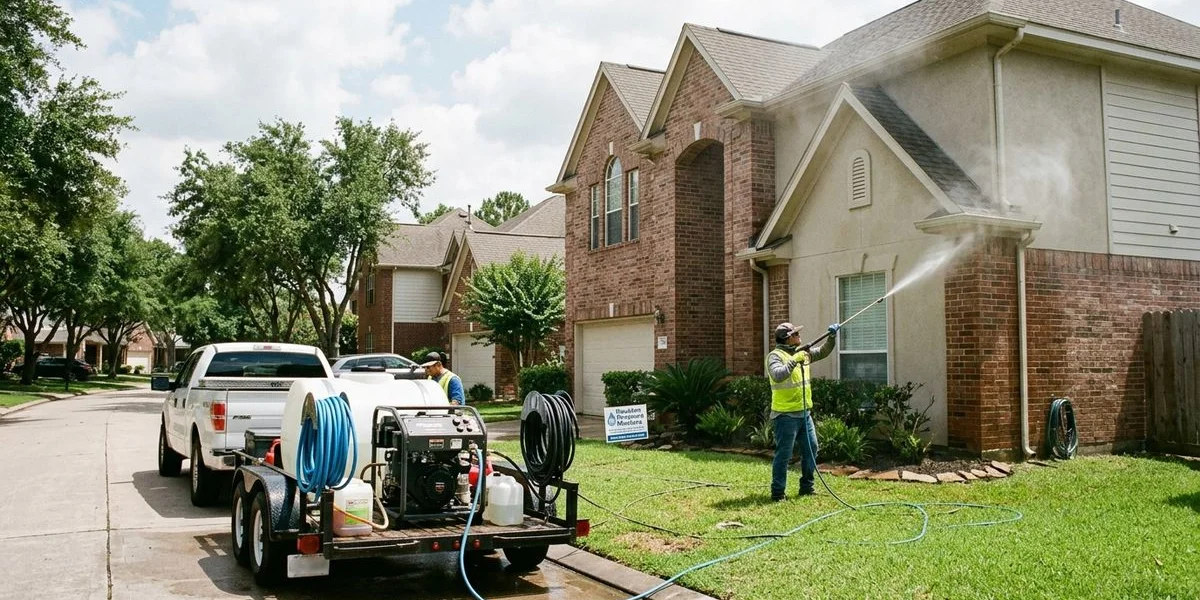
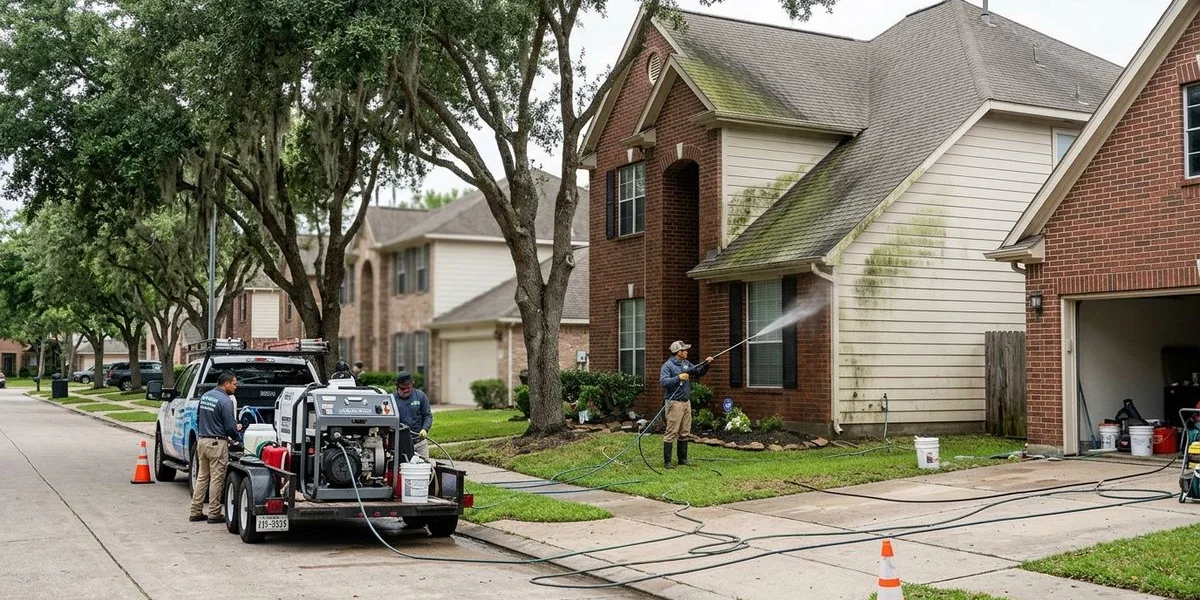
You already know that keeping a property looking sharp in Southeast Texas is an ongoing battle against the elements. A frequent question we answer is, how often should you pressure wash your house in Houston? Heat, humidity, and constant moisture create the perfect breeding ground for organic growth on building exteriors.
We see this daily as the team at Houston Texas Power Washing, where our primary focus is providing reliable exterior cleaning services for residential and commercial properties. This continuous exposure means standard national maintenance advice rarely applies to our specific region.
Identifying the right frequency for exterior washing prevents long-term damage and keeps costly HOA violation letters out of your mailbox. Our experts will break down the specific environmental factors driving this timeline and share a practical schedule.
How Often Should You Pressure Wash Your House in Houston? The Short Answer
Most homes in the Greater Houston area benefit from professional house washing every 12 to 18 months. Certain micro-climates or neighborhood setups require much more frequent attention to prevent severe staining.
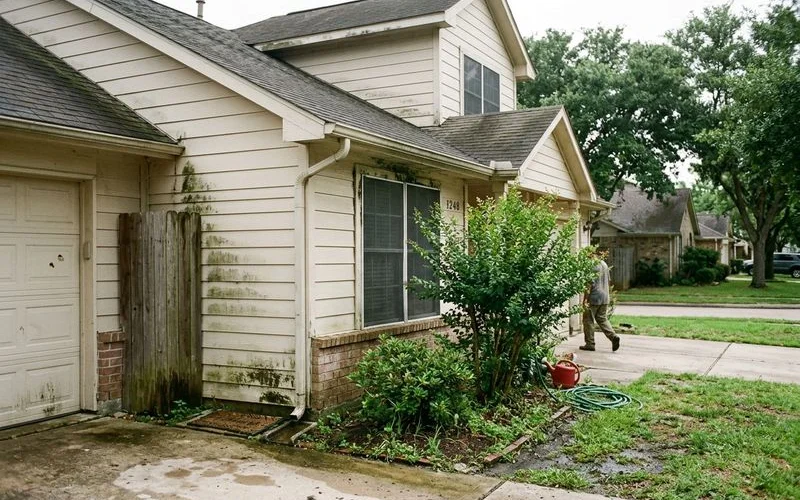
We highly recommend adjusting this baseline if your property has heavy tree coverage or sits near a large body of water. Skipping a yearly wash gives aggressive cyanobacteria plenty of time to embed into your siding and roofing materials.
Factors That Affect Your Cleaning Schedule
Tree Coverage and Debris
Homes surrounded by mature trees accumulate organic debris at a rapid pace. Dropping leaves, heavy pollen, and dripping sap act as a food source for mold and mildew. If your home sits under the shade of massive Live Oaks or Loblolly Pines, you should plan for a thorough cleaning every 12 months.
We find that shaded areas retain morning dew much longer than sun-exposed walls. This lingering moisture accelerates surface soiling significantly.
Sun Exposure and Orientation
North-facing walls receive very little direct ultraviolet light throughout the year. This lack of sunlight allows these specific exterior walls to stay damp, creating a prime habitat for aggressive organic growth.
Our technicians frequently target the following problem spots on shaded walls:
- Areas directly under deep roof eaves.
- Siding blocked by dense decorative bushes.
- Sections shaded by neighboring two-story houses.
- Behind heavy outdoor patio furniture.
Frequent maintenance stops these early stains from spreading.
Proximity to Local Moisture
Living near lakes, bayous, or neighborhood retention ponds drastically increases localized humidity levels. Properties situated near Buffalo Bayou or Lake Houston experience a constant moisture load that feeds biological growth year-round. Annual cleaning is absolutely essential for homes located in these high-humidity pockets.
Siding Material Specifics
Different building materials react differently to the extreme Texas climate. You need to match your cleaning frequency to the specific porosity and texture of your exterior.
| Material | Recommended Frequency | The Science Behind It | Safe Cleaning Method |
|---|---|---|---|
| Vinyl siding | 12 to 18 months | Texture traps algae and mildew spores | Soft wash under 500 PSI |
| Stucco | 12 to 18 months | Highly porous surface absorbs moisture and stains | Low-pressure chemical wash |
| Fiber cement | 18 to 24 months | Resists rot but still collects surface growth | Gentle soft wash |
| Brick | 18 to 24 months | Dense clay is tough, but mortar joints harbor organisms | Medium pressure wash |
| Wood siding | 12 months | Extremely susceptible to biological degradation | Low-pressure soft wash |
HOA Compliance Requirements
Many master-planned communities across our region enforce strict exterior maintenance standards. Neighborhoods like The Woodlands or Cinco Ranch are known for sending prompt violation notices if they spot visible algae or dirty siding on a property. Staying ahead of the grime keeps you compliant and prevents the stress of reactive scrambling.
We always advise our clients to schedule their maintenance before the spring inspection season begins. Proactive washing eliminates the risk of sudden fines.
Signs Your House Needs Cleaning Now
You should not wait for your scheduled annual wash if you notice active deterioration. Keep an eye out for these specific warning signs:
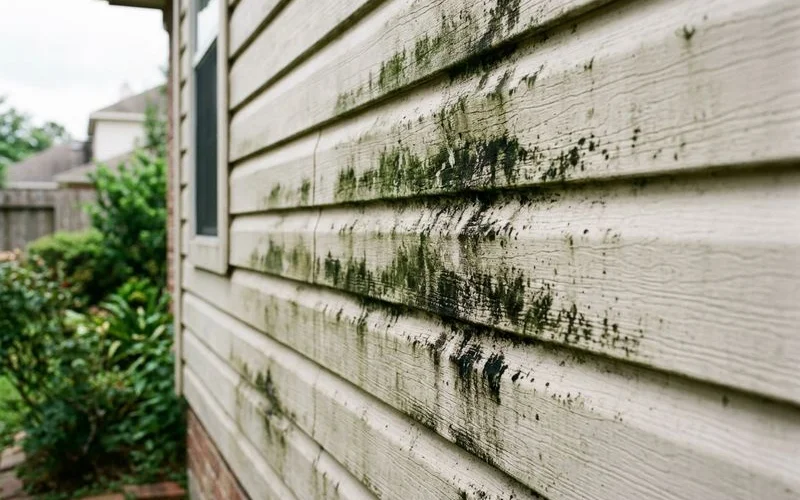
- Green or black streaks on siding, heavily concentrated on north-facing walls.
- Dark patches lingering under eaves or spreading around window frames.
- Discolored gutters displaying vertical tiger stripes caused by electrostatic bonding.
- Chalky oxidation forming a dull film on painted surfaces.
- Visible fungal growth around door frames or HVAC utility pads.
- Slippery concrete walkways near the foundation that pose a fall hazard.
These symptoms indicate that biological growth is actively degrading your exterior surfaces. Professional intervention is required to halt the damage.
Houston’s Climate Causes Faster Buildup
The local weather patterns demand a much higher cleaning frequency than the national average.
- Annual rainfall: We receive roughly 50 inches of rain per year, providing endless moisture for spores.
- High temperatures: In 2025, Houston recorded an exhausting 145 days of 90-degree heat.
- Average humidity: Baseline humidity hovers above 75 percent, turning shaded walls into greenhouses.
- Frost-free days: We experience over 300 frost-free days annually, allowing organisms to multiply continuously.
- Heavy pollen: Multiple intense pollen seasons coat homes in a sticky yellow film.
We know that homes in dry climates like Denver can go years without a wash. A Texas home requires a totally different level of care.
The Cost of Waiting Too Long
Ignoring your exterior maintenance does more than just hurt your curb appeal. Postponing a wash leads to measurable financial consequences.
Accelerated Surface Degradation
Those black streaks on your roof and siding are usually a cyanobacteria called Gloeocapsa magma. This organism actively feeds on the limestone filler in your exterior materials. Left untreated, this growth causes several distinct problems:
- Breaks down protective shingle granules.
- Produces corrosive acids that eat into paint.
- Forces moisture deep into wood grain.
- Compromises the structural integrity of thin siding.
Higher Restoration Costs
Heavy buildup requires stronger cleaning solutions, extended labor hours, and multiple treatment passes to remove safely. Regular upkeep saves serious money.
“A property cleaned annually costs far less to maintain over a five-year period than a severely neglected house that requires aggressive restorative washing.”
Reduced Property Value and ROI
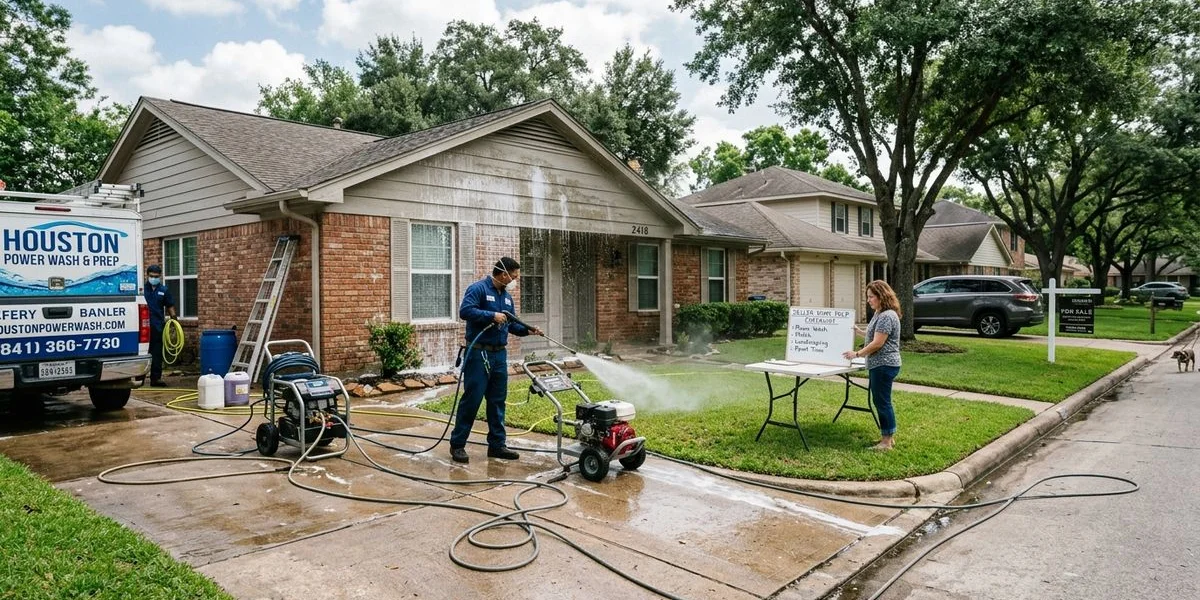
A dirty exterior drastically lowers your home’s perceived value in the real estate market. The 2025 Zonda Cost vs. Value report clearly shows that exterior renovations and curb appeal enhancements deliver the highest return on investment for sellers. A professional wash is the fastest way to protect that value before listing a property.
Manufacturer Warranty Issues
Many siding and shingle manufacturers explicitly require routine maintenance to keep their warranties active. Failing to document regular cleanings can completely void your coverage right when a major failure occurs.
Building Your Home Maintenance Schedule
Establishing a predictable routine is the easiest way to manage your property. Use this regional maintenance calendar to stay on track:
| Target Month | Essential Exterior Maintenance Task |
|---|---|
| January to February | Roof inspection and winter gutter clearing |
| March to April | Spring house washing to remove winter grime |
| May to June | Window cleaning and wood deck sealing |
| July to August | Concrete driveway and sidewalk pressure washing |
| September to October | Pre-fall soft washing to address summer algae |
| November to December | Final gutter clearing and holiday light preparation |
Professional vs. DIY Cleaning
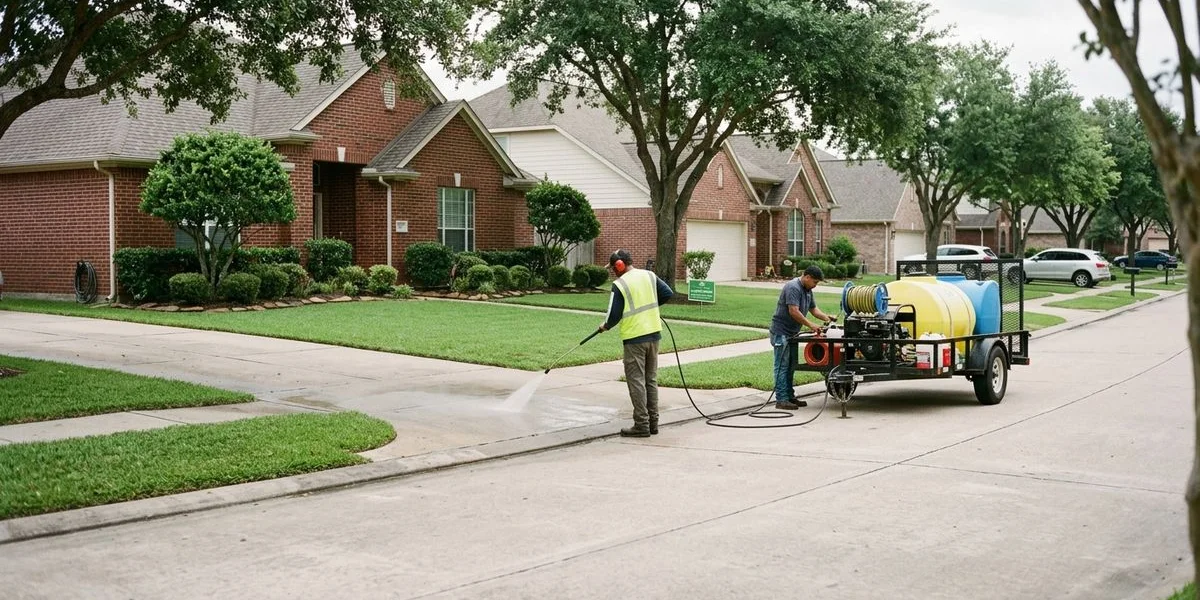
While buying a machine at a big box store seems tempting, professional cleaning offers distinct advantages in our challenging climate.
- Correct method selection: Experts know exactly when to use a low-pressure soft wash instead of a high-pressure blast.
- Chemical expertise: Professionals mix specific solutions that kill Gloeocapsa magma without burning your expensive landscaping.
- Advanced equipment: Commercial-grade systems can safely spray cleaning agents up to four stories high right from the ground.
- Time efficiency: A trained crew finishes a massive project in hours instead of eating up your entire weekend.
- Property protection: Experienced technicians know how to rinse properly so they never force water behind your delicate siding.
We see countless examples of DIY damage where homeowners accidentally etch their concrete or strip paint from their walls. Hiring a pro eliminates this expensive risk entirely.
Get on a Regular Schedule
Booking a recurring service is the smartest move you can make for your property. If you are still wondering how often should you pressure wash your house in Houston, the answer lies in consistent care.
We highly recommend locking in your annual or bi-annual cleanings well in advance. A customized timeline based on your specific tree coverage and sun exposure makes all the difference.
Contact us to schedule your home’s cleaning or to discuss a maintenance plan that fits your property and budget. Setting up a predictable routine ensures your house looks pristine all year long.
Written by
Juan Hernandez Martinez
Owner & Lead Technician
Juan Hernandez Martinez is the founder of Houston Texas Power Washing, a veteran-owned exterior cleaning company serving the Greater Houston area for over 20 years.