Soft Washing vs. Pressure Washing: Which Is Right for Your Houston Home?

Juan Hernandez Martinez
January 15, 2025 · Owner & Lead Technician
You know how quickly a property can go from looking pristine to completely weathered in this climate. The constant battle against algae and dirt forces many to ask about soft washing vs. pressure washing: which is right for your Houston home?
Our team at Houston Texas Power Washing founded this company to provide reliable, high-quality exterior cleaning services for residential and commercial properties. Seeing the results of extreme weather damage every single day across the city gives us a unique perspective.
Choosing the correct exterior cleaning method makes all the difference between protecting your investment and causing expensive damage. If you have researched exterior cleaning for your local home, you have probably encountered these two terms.
They sound similar, but they are entirely different approaches. We are going to break down the science behind each method and explain exactly when to use them.
Let’s look at the data and explore practical ways to keep your property looking its best.
What Is Pressure Washing?
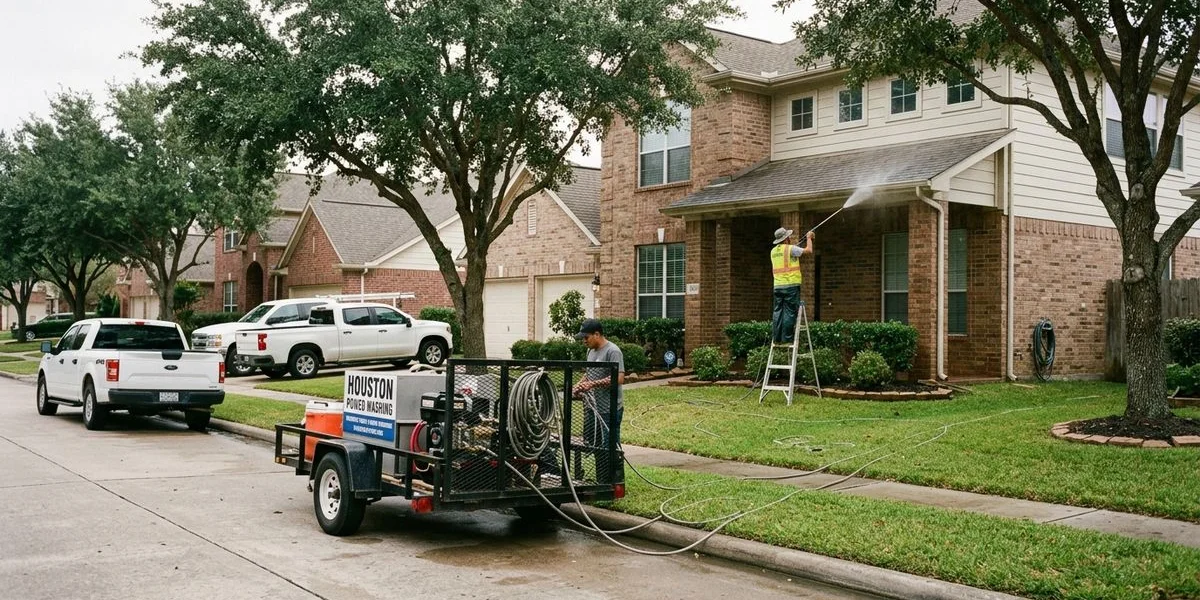
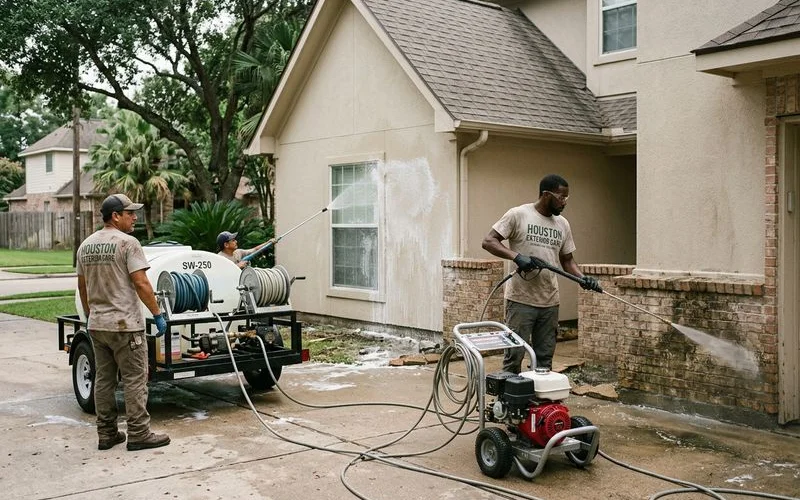
Pressure washing relies on high-pressure water to blast away dirt, grime, and stubborn stains from hard surfaces. The sheer force of the water does the heavy lifting, typically operating between 2,500 and 4,000 PSI.
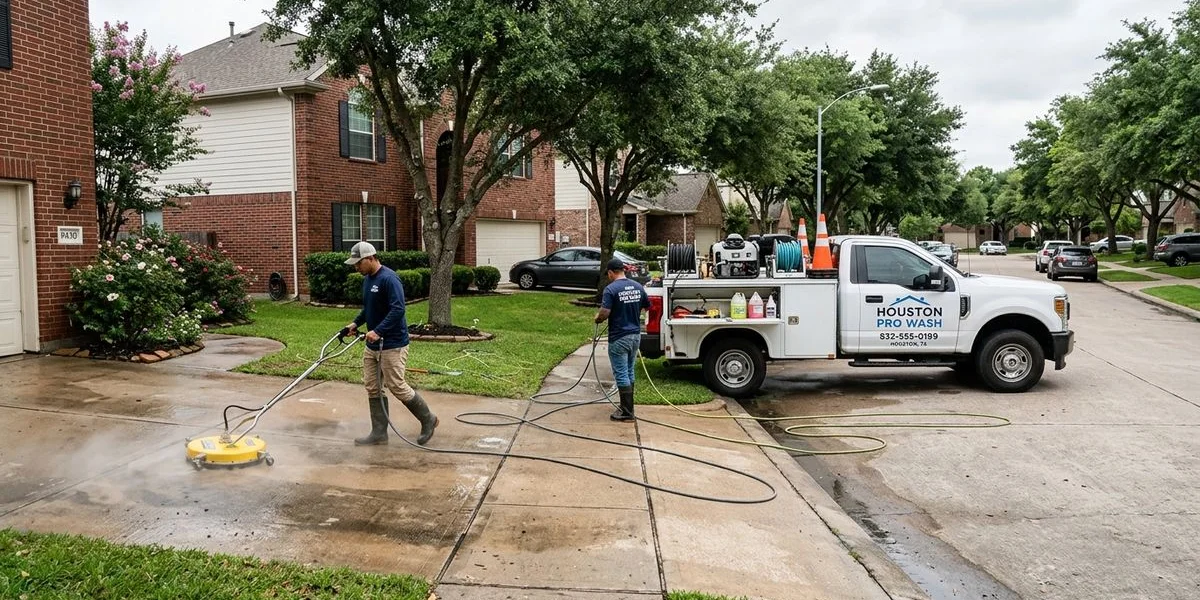
Our equipment utilizes the standards set by the Power Washers of North America (PWNA) to ensure safe and effective cleaning. The PWNA recommends setting machines between 3,000 and 3,500 PSI for standard residential concrete. This specific pressure lifts dirt without etching the surface or removing the cream coat.
Volume is just as important as pressure in this process. A higher Gallons Per Minute (GPM) rating allows professionals to rinse away loosened dirt much faster. This speed reduces the time the concrete is under stress.
Best for:
- Concrete driveways and sidewalks
- Brick pavers and stone walkways
- Parking lots and garage floors
- Pool decks
- Industrial equipment and heavy machinery
We only recommend this intense pressure for dense materials like concrete and stone. These surfaces easily withstand the force without sustaining damage. Using it on softer materials is a guaranteed recipe for disaster.
What Is Soft Washing?
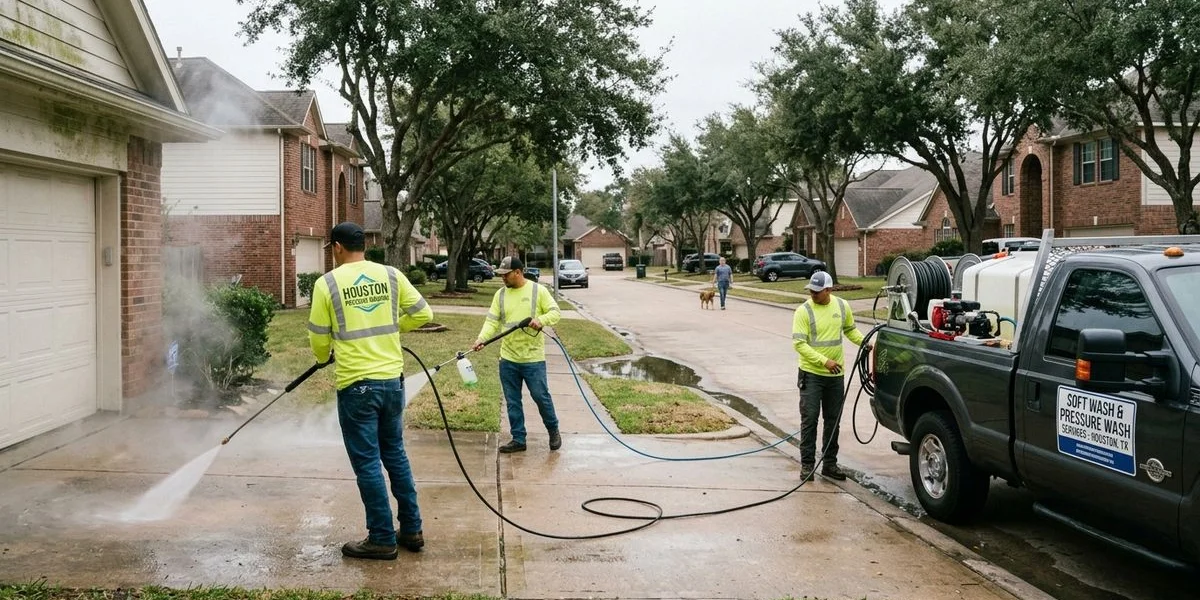
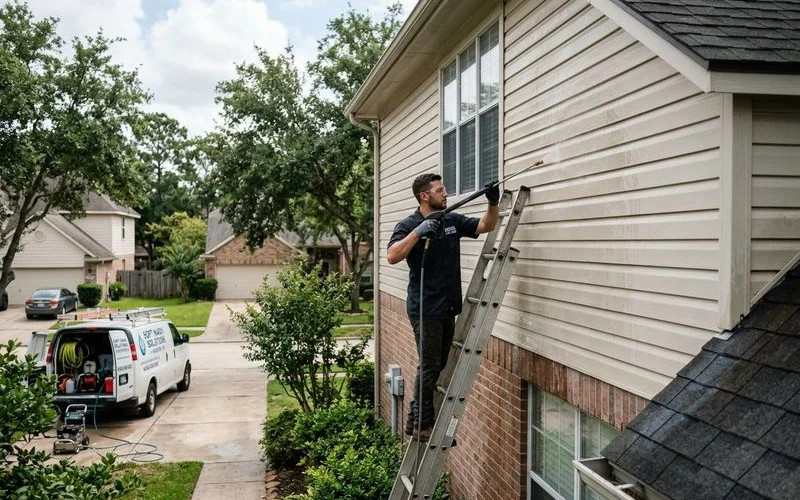
Soft washing uses low-pressure water combined with specialized cleaning solutions to safely clean delicate exteriors. This method operates at around 60 to 100 PSI, which is comparable to the flow from a standard garden hose. Instead of relying on brute force, the process uses chemistry to kill biological growth right at the root.
Our preferred soft wash solution incorporates Sodium Hypochlorite mixed with a clinging surfactant. The surfactant allows the mixture to stick to vertical surfaces and break down deep-set stains. This chemical approach eliminates the mold and algae entirely, preventing rapid regrowth.
The Asphalt Roofing Manufacturers Association (ARMA) explicitly requires this method for roof cleaning. ARMA guidelines state that high pressure will strip the protective ceramic granules off asphalt shingles and void the manufacturer warranty.
Best for:
- Vinyl, wood, and fiber cement siding
- Asphalt shingle and tile roofs
- Painted surfaces
- Stucco and Exterior Insulation and Finish Systems (EIFS)
- Decks and fences
- Any surface susceptible to water intrusion
We strictly follow these industry guidelines to protect your property and your warranty. These biodegradable solutions are completely safe for your landscaping, pets, and family when applied by trained professionals. The results speak for themselves, delivering a deep clean without the risk of structural damage.
Soft Washing vs. Pressure Washing: Which Is Right for Your Houston Home?
Houston’s subtropical climate creates specific challenges that demand a specialized approach. Understanding these local factors is crucial for proper maintenance.
Humidity-Driven Biological Growth
Houston’s average humidity sits above 75%, creating the perfect breeding ground for organic invaders. The most common culprit is a destructive cyanobacteria called Gloeocapsa magma. This organism appears as dark, ugly streaks on roofs and siding across the US.
Our technicians frequently see Gloeocapsa magma feeding directly on the limestone filler used in asphalt shingles. Pressure washing alone merely blasts away the top layer of this bacteria, leaving the root system intact. The organism requires a targeted chemical soft wash treatment to truly eradicate the colony. Eliminating it at the molecular level is the only way to stop it from returning a few weeks later.
Delicate Exterior Materials
Many local homes feature stucco, fiber cement siding, or painted brick exteriors that require a gentle touch. Blasting these materials with high pressure causes severe issues:
- Cracks and splits in siding panels
- Stripped paint and removed protective coatings
- Water forced behind exterior walls and into insulation
- Voided manufacturer warranties on roofing and siding materials
Recent 2026 data from Angi reveals that siding repairs in Houston average $1,990. The most common causes are cracking and warping driven by moisture intrusion.
We utilize soft washing for house washing to clean these surfaces thoroughly while keeping the water exactly where it belongs. Proper techniques protect your home’s structural integrity and save you from facing a massive repair bill.
Intense UV and Heat
Extreme sun exposure and heat make exterior surfaces brittle over time. Older materials that have weathered years of UV radiation are incredibly susceptible to pressure damage. A surface that could handle 2,000 PSI five years ago might crack instantly today.
Our team assesses the age and condition of every material before pulling a single trigger. Applying low-pressure solutions ensures that sun-baked siding gets clean without shattering under the stress. This careful evaluation prevents unnecessary destruction.
Surface-by-Surface Guide
Here is a quick reference guide for cleaning common residential surfaces in our region. Using objective data helps you understand exactly what each material requires.
| Surface | Recommended Method | Technical Specification | The “Why” |
|---|---|---|---|
| Concrete driveway | Pressure washing | 3,000 to 3,500 PSI | Dense surface handles high pressure effectively |
| Vinyl siding | Soft washing | < 100 PSI + Surfactant | Prevents cracking and expensive water intrusion |
| Asphalt roof | Soft washing | ARMA-approved chemical mix | Protects shingles and preserves manufacturer warranty |
| Brick walkway | Pressure washing | 2,500 to 3,000 PSI | Hard surface allows for mortar staining removal |
| Wood deck | Soft washing | Low pressure + Wood brightener | Prevents splintering and irreversible grain damage |
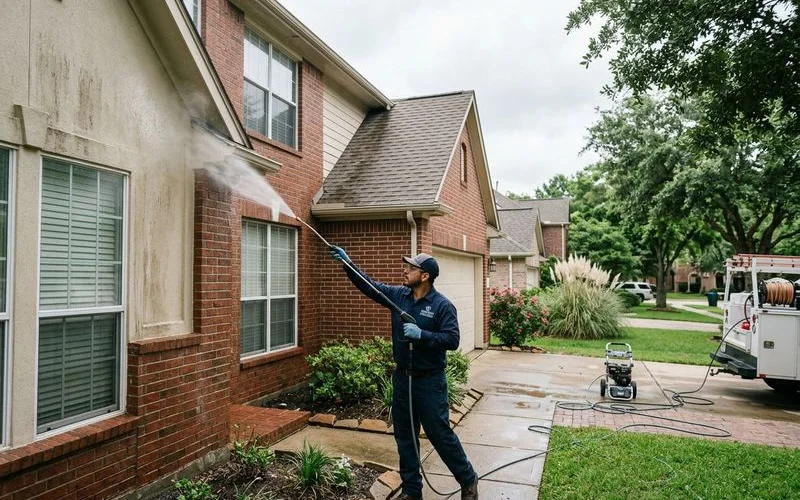
| Stucco walls | Soft washing | Low pressure + Mildewcide | Prevents cracking and deep water penetration |
| Pool deck | Pressure washing | 3,000 PSI | Removes slippery biological growth from concrete |
| Painted wood | Soft washing | < 100 PSI | Preserves paint integrity and prevents peeling |
| Metal roof | Soft washing | Low pressure + Detergent | Prevents denting and protective coating damage |
| Garage floor | Pressure washing | Hot water + Degreaser | High heat easily removes stubborn oil and grease |
We keep this chart handy to ensure every job gets the exact treatment it needs. Relying on facts rather than guesswork is the secret to consistent, damage-free results.
The Hybrid Approach
Most properties require a customized mix of techniques to achieve a true, top-to-bottom clean. A house might need gentle chemistry for the roof and siding, but aggressive pressure for the concrete driveway.
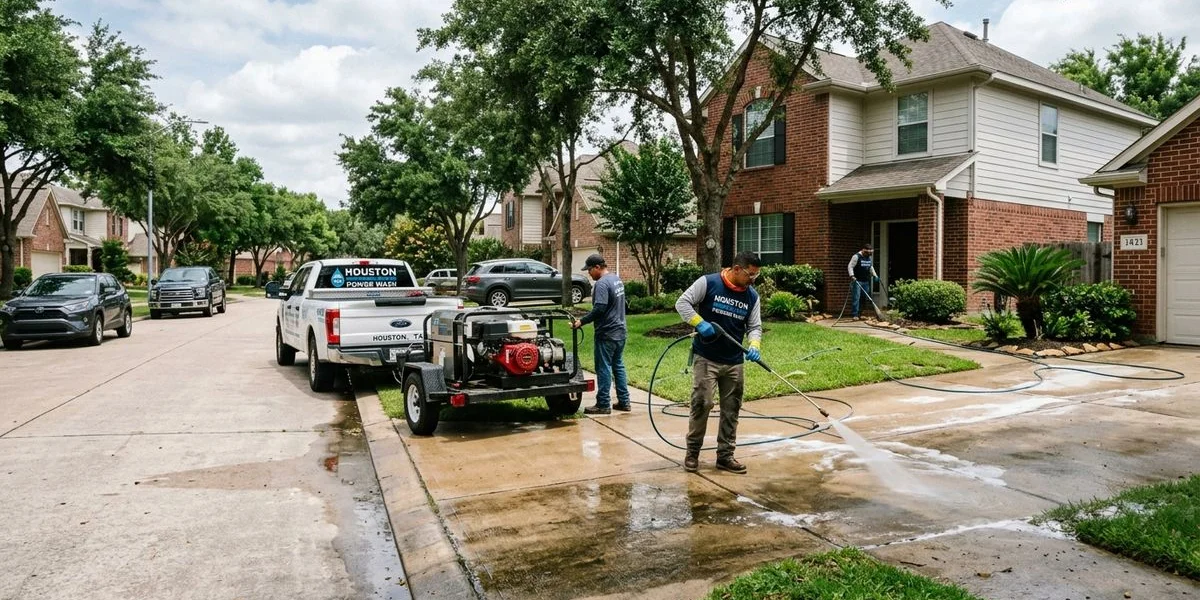
Our custom-built rigs feature proportioner valves that allow us to switch methods seamlessly. This technology lets technicians dial in the exact ratio of Sodium Hypochlorite, surfactant, and water on the fly.
“A hybrid approach ensures every single surface receives the maximum level of clean with the minimum amount of stress.”
We can instantly transition from a delicate roof wash to a high-pressure sidewalk cleaning. Treating every surface with its ideal method protects your home from inappropriate cleaning tactics.
Common Misconceptions
The exterior cleaning industry is full of bad advice that costs property owners thousands of dollars.
”Higher pressure equals better cleaning”
This is entirely false when dealing with delicate surfaces. Cranking up the PSI on vinyl siding or asphalt roofs will cause severe damage without actually improving the clean. The chemical solution does all the heavy lifting on biological growth.
Our experts use pressure merely as a rinsing tool after the detergents have killed the algae. Pushing water harder against a stubborn stain usually just breaks the material underneath it.
”Soft washing is just turning down the dial”
Many people mistakenly think they can just back away from the wall with a standard pressure washer to achieve a soft wash. A true soft wash setup requires specific components:
- Agricultural-style pumps designed for corrosive solutions
- Proportioner valves for precise chemical mixing
- Dedicated hoses that will not degrade from algaecides
- Specialized fan tips that operate under 100 PSI
We use this specific equipment safely every single day. Simply reducing the pressure on a standard machine without using the appropriate algaecides will never produce professional results. The organisms will remain alive and quickly grow back.
”I can safely pressure wash my own house”
While DIY pressure washing looks easy in videos, improper technique commonly causes devastating property damage. Blasting water into soffit vents or under siding panels forces moisture right into your insulation and drywall.
A 2026 report from Angi shows that water damage restoration in Houston costs homeowners anywhere from $1,067 to $5,169 on average. We urge property owners to weigh that massive financial risk against the cost of a professional cleaning. Experienced technicians understand exactly which methods, pressures, and chemicals are appropriate for each unique surface type.
The Bottom Line
Both methods play vital roles in maintaining your exterior spaces. When considering soft washing vs. pressure washing: which is right for your Houston home, the key is applying the exact correct method to the appropriate surface.
Our priority is always protecting your investment while delivering exceptional curb appeal. When in doubt, consult with a professional who understands both techniques deeply.
Ready to get your home cleaned the right way? Contact us for a free estimate, and we will recommend the best approach for your property.
Written by
Juan Hernandez Martinez
Owner & Lead Technician
Juan Hernandez Martinez is the founder of Houston Texas Power Washing, a veteran-owned exterior cleaning company serving the Greater Houston area for over 20 years.